
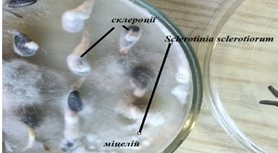
Seed mycobiota is an important component of plant ecosystems, as it affects their health, development, and resistance to diseases. Analyzing seed mycobiota allows for the identification of fungal pathogens that may impact the yield and quality of agricultural crops. In Ukraine, research is actively conducted to determine the spectrum of fungi that inhabit the seeds of major agricultural crops.
In particular, we have identified new species of fungi in the wheat mycobiota, which is important for Ukrainian agriculture. The newly discovered species include: Alternaria arborescens E.G. Simmons, Alternaria botrytis (Preuss) Woudenb. & Crous, Alternaria gaisen Nagano ex Hara, Arthrinium arundinis (Corda) Dyko & B. Sutton, Harzia acremonioides Les Mucédinées, Chaetomium rectangulare Asgari & Zare, Nigrospora osmanthi Mei Wang & L. Cai, and Nigrospora sphaerica (Sacc.) E.W. Mason.
These fungal species are significant as potential pathogens capable of causing various diseases such as alternariosis, fusariosis, or artidiosis. Some of them can be potential sources of toxins that degrade seed quality and reduce yields. For example, some Alternaria species can produce alternariol, which is toxic to plants.
The analysis of sunflower seed mycobiota is also crucial for agronomy, as sunflower is one of Ukraine’s primary crops. Identifying specific fungi in sunflower seeds can help detect potential risks to plant health and determine the need for fungicide application or other agronomic measures. Specifically, the sunflower seed mycobiota may include fungi from the Fusarium genus, which causes fusariosis, or pathogens from the Verticillium genus, which affect the development of the root system.
Overall, seed mycobiota analysis is an important step in forecasting plant diseases and developing strategies to combat fungal pathogens, ensuring crop health, increasing yields, and reducing economic losses.
Contact us