
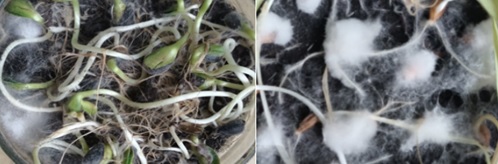
Plant disease diagnosis is critically important for ensuring the health of crops and maximizing yields. Identifying plant damage caused by Fusarium fungi, particularly Fusarium solani, is highly significant for agronomists and farmers, as these fungi can cause serious diseases that reduce both yield and quality of crops. Damage to wheat, barley, maize, sunflower, and other crops by this pathogen can lead to various issues, ranging from reduced seed germination to root rot and stem infections, which, in turn, affect the overall health of the plants and their resistance to other diseases.
Traditional methods for isolating Fusarium fungi from soil through culturing are not always effective, as they often fail to accurately detect pathogens present in very low concentrations in the soil. Therefore, a new detection method has been developed, which involves directly analyzing seed germination in infected soil. This approach provides more precise information about the presence of the fungi, as they become active during seed germination, allowing for the identification of potentially dangerous areas.
The analysis is carried out as follows: soil samples are collected and used to germinate seeds of sensitive crops (such as wheat or maize). During germination in laboratory conditions, possible damage to the root system or seedlings is observed, indicating the presence of pathogens. Subsequently, microbiological testing is conducted to detect Fusarium solani and other Fusarium fungi. This approach enables more rapid and accurate detection of soil contamination and allows for the implementation of necessary agronomic measures to reduce the risk of plant damage in the future.
Contact us